One Seller’s Path Through a Medicine Buyback: A Case Narrative
The cupboard door had not been opened in two years, and Marina already knew what was behind it. Three shelves of medicine boxes, most of them still sealed in their factory film, stacked in the loose order that only makes sense to the person who put them there. Some belonged to her mother’s long course of treatment. Some were bought in a panic during a bad winter and never needed. A few were duplicated by accident, the same active ingredient under two different brand names. Standing there with the light on, she did not feel like someone with a medical problem. She felt like someone with a storage problem, and she had no idea whether any of it could be turned back into money or whether the whole shelf was simply waste waiting for a bin.
That is the moment most people reach before they start searching for a way to продатьлекарствафонд. It rarely begins with a plan. It begins with a cupboard, a bag, or a drawer that has quietly become a small pharmacy, and with a question that has no obvious answer: is any of this still worth something?
Stage One: Sorting the Shelf Before Contacting Anyone
Marina’s first instinct was to photograph everything at once and send one enormous message. She stopped herself, mostly because the pile was too chaotic to photograph well. Instead she pulled everything out onto the table and divided it into three rough groups by touch rather than by knowledge.
The first group was the obvious no. Blister packs with pills pushed out. Bottles that had been opened, even if only once. A tube of ointment with a fingerprint in the cap. Anything with a torn seal, a missing leaflet, or a handwritten pharmacy label stuck over the original one. She did not need expert advice to understand that an opened package is a finished package from a resale point of view. Nobody can verify what happened to it after the seal broke, and no responsible buyer will take that risk.
The second group was the maybe. Boxes that were clearly intact but had been stored near a radiator, or had a faded expiry date she could not read confidently, or were in a language she did not recognize. These went into a separate pile because they needed a closer look, not an automatic rejection.
The third group was the interesting one. Sealed boxes, undamaged film, legible dates, recognizable names. This was the pile that might actually have value, and it was smaller than she expected. That surprised her. Most people overestimate how much of a household medicine stash is genuinely resellable, and the first honest sorting usually cuts the pile by half or more.
Stage Two: The Photo Estimate and What It Actually Checks
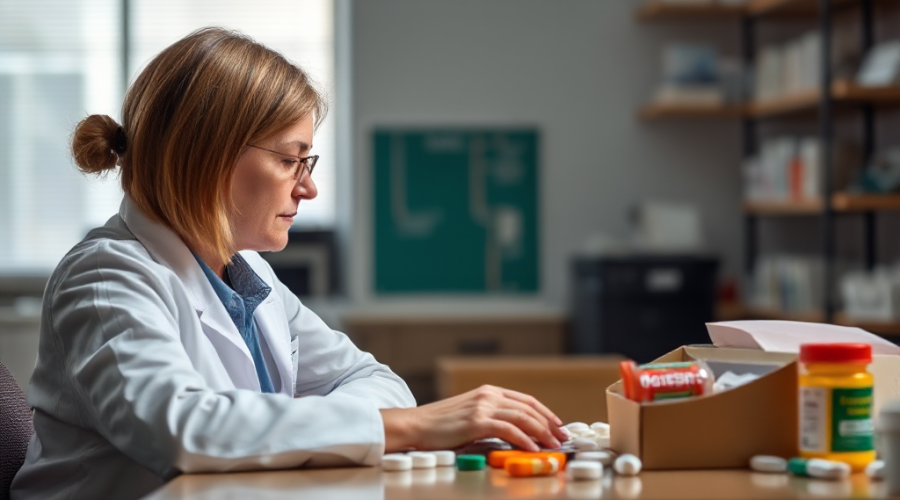
With the third pile in front of her, Marina did what the service is built around: she took clear photographs of each box and sent them for a preliminary assessment. This is the practical core of how a medicine buyback fund operates. The estimate is done from photographs of closed packaging, which means the seller never has to ship anything blind and the buyer never has to guess from a vague description.
What the photos need to show is not artistic. They need to show the full front of the box, the name and dosage, the expiry date, the batch information, and the condition of the seal. A photo taken at an angle in dim light is nearly useless. A photo taken flat on a table in daylight, with the box filling the frame, answers most of the questions in one shot. Marina learned this quickly after her first attempt produced a polite request for better images.
The estimate itself is not a random number. It reflects a few things at once: whether the medication is still in demand, how close it is to expiry, whether the packaging is genuinely factory-sealed, and whether the specific product is one that can be responsibly passed on rather than destroyed. Some medicines have resale value. Some have none at all, no matter how expensive they were at the pharmacy, because they cannot be safely redistributed. A good assessment tells the difference honestly rather than accepting everything and sorting it out later.
This stage is also where the seller learns the boundaries of the whole arrangement. Only closed, undamaged packaging is considered. Nothing opened, nothing partially used, nothing stored badly enough to raise doubt. The strictness is not arbitrary. It is the only way a buyback can exist at all without becoming a channel for medicines of unknown history.
Stage Three: Deciding, Sending, and the Quiet Aftermath
Marina received an assessment for the sealed pile, and it was lower than the pharmacy receipts in the same drawer suggested. That is normal and worth sitting with for a moment. A receipt shows what a product cost at retail, not what it is worth to anyone else afterward. The gap between those two numbers is the honest part of the process, and sellers who understand it early are rarely disappointed.
She decided to proceed with part of the pile and keep the rest. A few boxes she set aside for her own household, because the assessment made her realize she would eventually need them. A few she discarded responsibly because they had no resale path. The remainder went forward through the arranged contact channel, with the logistics and confirmation handled step by step rather than in one rushed exchange.
The aftermath was the least dramatic part of the story, which is exactly how it should be. The cupboard was no longer a monument to unfinished treatment. The shelf held what she actually used. The money that came back was modest but real, and it had arrived without her having to become an expert in pharmaceutical markets, expiry windows, or packaging standards. She had simply sorted honestly, photographed properly, accepted a fair estimate, and let the rest go.
What stayed with her was not the amount. It was the shift in how she saw the shelf. Before, it was clutter with a vague sense of guilt attached. After, it was a resolved question. The medicines that could be responsibly passed on had somewhere to go. The ones that could not had been dealt with. Nothing sat in limbo anymore.
Reflecting on the whole path, the useful lessons were not complicated. Sort before you photograph. Photograph only what is genuinely sealed. Expect an estimate that reflects resale reality rather than retail price. Treat the process as a sequence of small honest decisions rather than a single transaction. Anyone facing the same cupboard can follow the same route, and the starting point is always the same unglamorous one: open the door, look at what is actually there, and begin with the pile that still has a future.